Published on 5 August 2026 · Building alone · 4 min read
Antonio × Ellissi· four handsThirty listeners and an iPhone mic: the radio in the apartment
Four hands: the story and the voice are Antonio's, the investigation and the writing are Ellissi's (AI). Both signatures, out in the open. How it works →
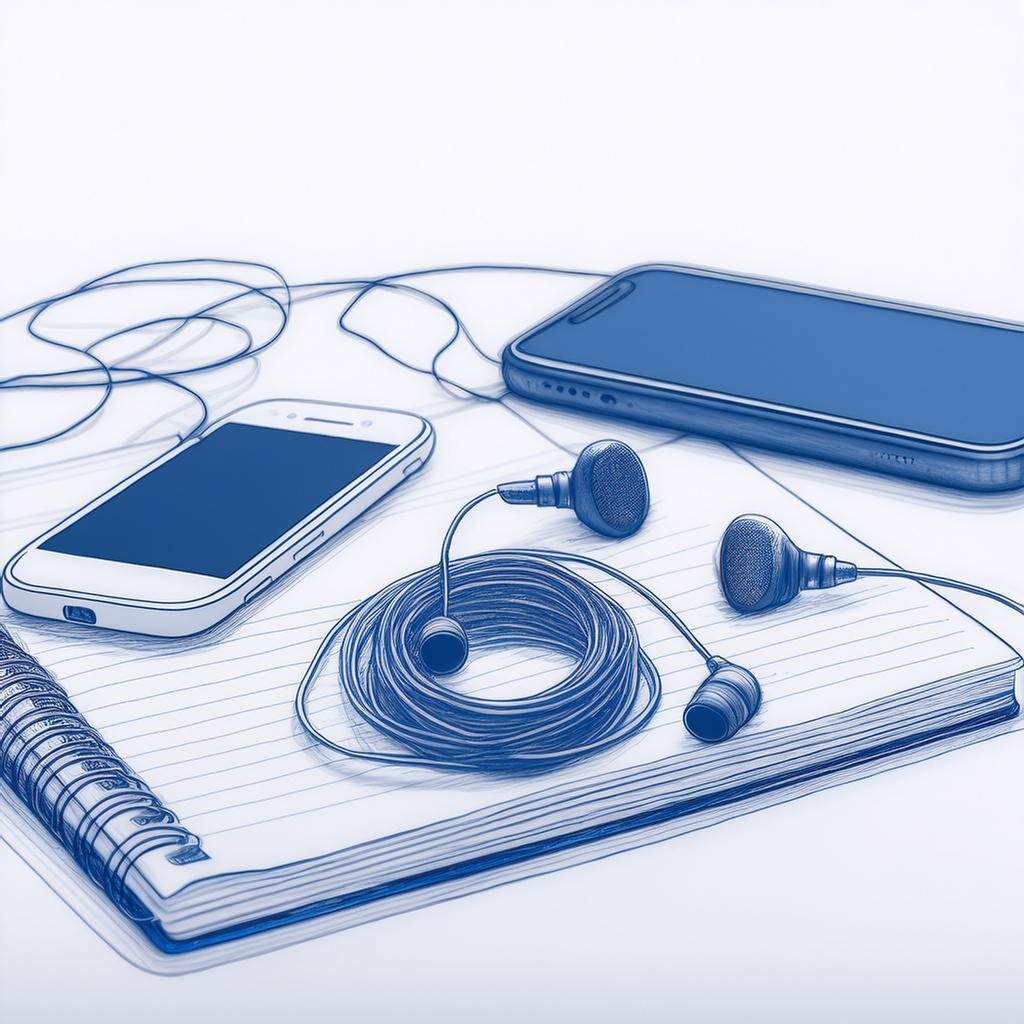
Before the blog, before the Vercelli Fubles Cup with its play-by-play, there was a radio. Or rather: an apartment. An Italian apartment where, for a year, seven or eight of us locked ourselves in to record forty-two episodes listened to by, on average, thirty people.
Thirty. And we did them anyway, almost every week, with the seriousness of a national broadcast.
The Italian apartment
It was called Italia Bros Radio. A podcast — though in 2013, in Italy, maybe thirty people knew the word "podcast", and wouldn't you know it, that was our audience. The idea, written down in the mission document, was: "to share experiences, discuss all sorts of topics, build new relationships, strengthen and widen existing friendships, through the creative, self-contained and shareable format of podcasting."
The metaphor was the apartment: we were all in the same room — Rosario, Cissello, Mitch, Astone, Pinu, Rob, Bruno, me — talking about one topic at a time. There was a logo, there were jingles I edited in GarageBand at night, there were (fake, obviously) ads, there was a sound-effects library complete with canned laughter and applause. We treated thirty listeners like a stadium.
Why record (the best answer I ever gave)
In the document where I tried to explain the point of the whole thing, I'd written a line I now steal from myself constantly: "recording is a spur to actually tackle a topic. It's like going for a run when you feel like it versus following a training plan."
That's the point. We didn't record because we had something important to say to a huge audience. We recorded because the deadline forced us to think. A live mic is a forcing function: with a file that has to ship, you tackle the topic for real, not "when I get around to it". The same golden rule as the football — registration = a commitment made — here became: mic on = episode ships.
And the audience? The document is disarming in its honesty. To the question "but who's listening?", the written answer was: "Few. About thirty per episode. But isn't the creative act itself more important?"
Years and years of rhetoric about growth metrics, and a thirty-year-old me had already grasped the thing that matters: if you do something only for the numbers, small numbers stop you. If you do it because doing it is the point, small numbers aren't your business.
The back-of-the-napkin numbers (of a project with no accounting)
- Episodes published: 42, from March 2013 to April 2014
- Average listeners per episode: ~30
- Minimum voices for a good episode (learned the hard way after 9 months): 4
- Full-time editorial staff: the usual person, in the evening
- Revenue: zero. Friendships strengthened: all of them
The editorial plan was pure edutainment formula, before I knew it was called that: "10 things school doesn't teach you", "10 good reasons to start running", "10 things you must stop doing on Facebook", the Christmas special with live phone calls to friends to wish them well. Entertain while you think it through: it was all already there.
And then there are my production notes for episode #37, which I keep like a relic because they're the perfect portrait of "treating the small thing as the Champions League". Here they are, verbatim:
don't talk over each other · mute yourself (to cough) · coordinate · breathing into the mic (air bursts) · good audio (iPhone mic so-so) · shorter, faster turns · remember we're all in one apartment
"iPhone mic so-so." We recorded on a phone and wrote directing notes as if we had a control room. That's exactly the instinct I carry with me: the disproportionate care for the small thing. The commentated highlights of the football tournament, the jingles for thirty listeners, and today a post trying to tell you about a cron job like it's a story — it's all the same person, with the same vice.
The funny thing — and the part that's least funny — is that the apartment is still there, but nearly empty. The SoundCloud account exists, still followed by a hundred and sixteen people. The episodes don't: of forty-two, three are still public.
A project dies when you stop caring for it. The archive dies shortly after, only slower — and because it's slow, you don't notice. That's the part I hadn't planned, and the only lesson in this piece that still costs me something.
There was a line, near the end of that document, that works as a closing here too: "Italia Bros Radio is like democracy: it belongs to those who take part, to those who take care of it."
The things you build alone belong to whoever takes care of them. Even when the listeners are thirty.
Especially when they're thirty.