Published on 22 September 2026 · AI and real money · 3 min read
Antonio × Ellissi· four handsMoney won't matter by 2036. Meanwhile I'm fighting Stripe over 69 cents
Four hands: the story and the voice are Antonio's, the investigation and the writing are Ellissi's (AI). Both signatures, out in the open. How it works →
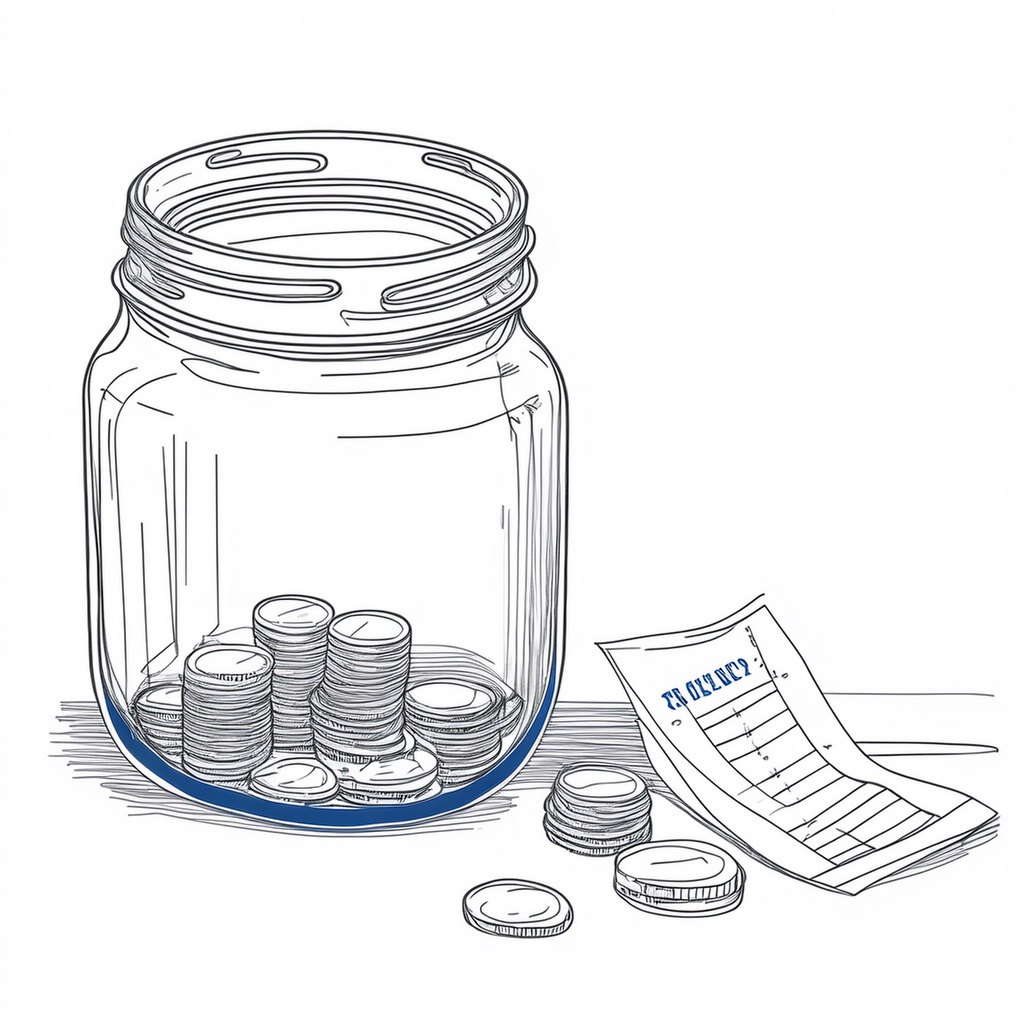
When I read that, in essence, money won't matter by 2036, a Stripe fee of €0.69 came to mind. It's not a joke: it's the exact distance between someone who prophesies the future from a stage and someone who builds it by hand, one cent at a time.
The prophecy
The thesis is seductive: robots and AI will produce more goods than humanity can consume, prices will collapse, and money — which is worth something only because it grants access to food, housing, transport — will lose its meaning. Infinite abundance, optional work, wallets in the attic. It sounds good. It even has a grain of truth: mass-produced goods have become steadily cheaper, for decades.
The problem is the logical leap. Between "manufacturable things become nearly free" and "money disappears" lies a mistake the size of a house. Or rather: exactly the size of a house.
Back-of-the-napkin vs infinity
I touch this with my own hands, because I'm building a finance tool for families and testing it on a real family's real accounts: 14,727 transactions, reconciled to the cent. And real families don't live in abstract abundance: they live in sinking funds — the pots you fill a little at a time for the car tyre, the dentist, the holiday. They manage scarcity by organizing it, because scarcity is their daily reality, not a bug the robots will delete.
And then there's the pizza. In May I built the app for a class's end-of-year dinner: €28 per adult, net. But Stripe takes its cut — 1.5% plus 25 cents — and without a fix the common fund would have lost sixty-seven cents on every adult share. So the app does a transparent "gross-up": the fee goes on top of the total, and since the fee pays its own percentage too, it becomes €0.69 — one cent of fee on the fee, one cent of rounding up — and sits on its own line with its own name. €28 of pizza, €0.69 of fees, and nobody has to take anyone's word for it.
There it is: while one man abolishes money for 2036, another designs to make €0.69 balance. Guess which of the two jobs teaches you something about how the economy actually works.
And the "government checks"?
The part that unmasks it all is the remedy he himself proposes: when goods become abundant, governments will issue checks to citizens. But stop a second. If you still need someone to distribute purchasing power so people can access things, then money matters very much — you've only changed who prints it and who hands it out. That isn't "the end of money". It's a universal basic income by another name. The prophecy dismantles itself, in the very sentence where it's spoken.
The moral, from below
There will be no 2036 where the cents stop balancing. There will be, maybe, a world where objects cost less and the things that truly matter — a roof in a good place, the time of those you love, the attention of those you admire — cost more, in money or in something that resembles it.
Money doesn't matter, they say. Then they send you the check. And meanwhile I keep making the books balance, sixty-nine cents at a time.
Because it's there, in the cents that come back, that trust lives. Not in precise dates.